Category Archives: Uncategorized

Racing Through Resistance – Finding a way to flow through


Moving your body through a triathlon is a practice of pushing through resistance. Friction, wind, and will are forcing you to expend energy. You have two choices, fight against the resistance or find a way to flow through. Finding your flow through the resistance is mostly a matter of mindset. How you react and adapt to the resistance determines your success.


Swim Resistance

The average human swimmer is 12% efficient when swimming. Your average dolphin is 80% efficient. The dolphin has evolved to flow through the water. To move effectively through water, you must concentrate on good form that minimizes drag. If you fight against the water the water will win.

Tips for flowing through water:

  • relax
  • Keep the body in a streamlined position
  • focus on gliding through the water
  • reduce any inefficient movement

Bike Resistance –

On the bike the wind is the major force of resistance. Pushing through the wind gets exponentially more difficult the faster you go. Flowing through the wind means reducing drag, and flowing through the air flow.

Tips for flowing through the wind:

  • use a set of aero wheels, energy savings of 5-8%
  • wear an aero helmet, energy savings 5%
  • a properly set up TT bike with aero bars can save 10-15% energy
  • Keep your knees tight to the top tube
  • in a stiff headwind maintain effort, don’t increase effort and burn yourself out

Wind can also play into mental resistance. A persistent headwind will wear you down. At times you are putting out a ton of effort, but making slow progress. In these times, you have to accept the headwind and flow through. If it is a race the wind is effecting everyone. Make yourself as small as possible, conserve your effort.

Run Resistance –

Running is essentially falling forward. You lean forward move your legs and you propel forward. Gravity is providing the greatest amount resistance, but also it is also moving you forward. Your job is find the flow, where you are using gravity to your avantage.

Tips for flowing though gravity on the run:

  • lean forward from the ankles
  • maintain good body position
  • take quick steps, to minimize contact with the ground
  • minimize up and down movement, concentrate on moving forward
  • breathe, relax, and don’t fight against your body


Life  –

Good things happen, Bad things happen. There is constant resistance trying to keep you from achieving your goals. The trick is to find a way to flow through the resistance. You can either fight against the resistance, or accept it and find a way to flow through. Be flexible, and adapt to the changes and situations. Things good and bad will happen, it how you react is what matters. If you are focused on your goals, you will find a way to flow through.


Enter the Washing Machine – Tips for your first open water swim

origin_3936735160


An open water swim is the most daunting part of the race for most new triathletes. We are land animals, and jumping into the water with a washing machine of arms and legs is not natural. With some practice and some strategy you can do it.

Here’s a recap of my first open water swim:

This was my first long open water swim. My plan was to survive, any means necessary. I would use my Swiss army knife of stroke techniques to complete the course. I was surprisingly relaxed at the start, ignorance is bliss. Some concern did creep into the group, as the race officials were still pulling the buoys into position as we were start. The countdown began, I positioned my goggles, and we were off. A sea of swim caps, arms and legs overtook me. My goal was to stay smooth, and conserve energy. First buoy can relatively quickly, and I sighted toward the second. As I turned the wind and current hit me in the face. The next 20 minutes were a blur of swimming and controlled drowning. The last 20M to the buoy took about 2 minutes. (I later learned the marker was actually floating away, nice.) I will not recount the last leg of the swim, because it was very painful, and I have put it deep in my memory, along with bad first dates, Vanilla Ice, and that halloween witch that scared the crap out of me when I was 5. I emerged from the water tired and dizzy, and headed for T1.

Here are some tips to help get you through your first open water swim:

Relax – This the most important and difficult thing to do in an open water swim. The situation goes like this: The guns goes off, the athletes stampede into the the water, you start to swim and there is a sea of arms and legs all around you. With all of this stress your heart rate is going to spike. It’s your job to breath and relax. Slow things down and find your own rhythm. It’s a long race, no need to burn all of your energy in the first 5 minutes.

Practice – To be comfortable in open water, practice in open water.  Not every workout needs to be in open water, that wouldn’t be practical. A couple of practice swims with a buddy prior to your open water race will suffice. The idea is to get used to the sights, sounds and feeling of open water.

Confidence – Be sure you are comfortable completing the distance. Having confidence in your ability to swim the distance will alleviate stress. Be sure to cover the distance in the pool a couple of times.

Warm up – It is a good idea to get down to the water prior to your race start and warm up in the water. It doesn’t need to be very long, maybe five minutes of swimming. During the warm up you can feel the water temp, and practice breathing. A good warm up should leave you feeling relaxed and ready to start.

The Start – Open water swim starts are chaotic. A group of athletes entering the water turns into a sea of arms and legs thrashing about. You are already excited about the race start, and the adrenaline of the moment can cause your heart rate to spike. This is where most people run into issues. My advice is to find some clear water and swim your own race.

If you are uncomfortable with contact,  start on the side of your wave, or let the group go for moment and then start. I haven’t found a good simulation for a race start. They get much easier with experience.

Conditions – Open water conditions are always changing. The swim is affected by wind, current, temp and weather. You need to be aware of the conditions. There should be pre-race meeting that will explain the water conditions. It’s a good idea to attend so you know what to expect. Also, remember you have no control over the conditions, so there’s no need to freak out.

Sighting – Sighting is the process of picking a landmark, and using that landmark to control your swim direction. Sounds easy right? It’s not easy, and takes practice. This is another skill to work on during your open water swim practice.

Every 8-10 breaths you look up and see where you are swimming. The best landmarks are big and obvious, like water towers or a large building. There will also be buoys marking the course. During a swim buoys can be difficult to see because of chop or glare. It is best to use a combination of landmarks and buoys.

Here’s an excellent article from Triathlete Europe on swim sighting.

Relax – It is so important that I put relax in the list a second time. Swimming with a red lined heart rate, and tight muscles is counter productive and can lead to panic. The best way to combat these issues is to find a way to relax. You can fight against the water, but the water will always win. My best advice is to relax, flow through the water, and find your rhythm.


Ahhh, That New Bike Smell – Tips on buying a Tri bike

Bike wall

You raced a few triathlons, and you are hooked. Its time to trade in that beater bike for a fast new time machine. Before you pay out the GDP of an island nation on a new tri bike, here are some things to consider.

*legal notice – Always inform your significant other of these large purchases. Don’t try to sneak a new bike in the garage hoping they won’t notice. Believe me it won’t work.

Commitment

Have you caught the triathlon bug? Do you see your yourself progressing in the sport, and riding consistently. A Tri bike is a big expense, so let your commitment drive your investment. Garages and Craigslist ads are filled with lonely Tri bikes bought with the best of intentions. The owners raced a couple of Tris, and in the euphoria of finishing, plopped down a wad of cash on a shiny new bike. Then life/kids/job/injury/beer got in the way, and the shiny new steed went unridden.

If you are getting consistent workouts in, and a new bike will take your racing and training to a new level, now is the time to purchase that new bike. A new bike is a great motivator to get you out there riding with great excitement. Its like getting a new car, but you don’t have to ride everyone around the block when you bring it home.

Cost

Let’s get this out of the way, Tri bikes are expensive, and in some cases ridiculously expensive. Consider your budget and weigh your options when choosing a new bike. My advice is to get the best quality bike you can afford. A well made bike that is properly maintained can last 10 years.

Here’s the main items that drive the cost of a bike:

  • Frame Material/Design – Carbon fiber bikes are the most expensive, Aluminum and steel bikes cost less.
  • Components – (Shifters, Brakes, Derailleurs, etc.) Each component manufacturer produces different groups on different price ranges. Components on entry level Tri bikes are more than adequate. The difference with the higher priced groups is normally weight.
  • Wheels – Here’s where you can save some money. Entry level tri bikes will come with decent wheels. Eventually these wheels will wear out, or you will want lighter race wheels. Save money on the front end and get standard wheels, as it is easy to upgrade later.

Many bike manufacturers offer the same frame with different components. If you are on a budget choose the cheaper components. This way you are still getting the great frame, and you can upgrade the parts as you want.

Base Model Triathlon Bikes:


Fit

This is the most overlooked, but most important factor of choosing a new bike. You can max out your credit card with a $10k carbon dream machine, but if it doesn’t fit, you won’t go any faster.

My advice is to go and test ride some bikes. Have a person from the shop spend time with you seeing how the bike fits your body. A good shop will put you on a trainer and make adjustments to see if the bike will fit you. This is time well spent. If the shop to go to is not willing to take this time, then run away. It is not the shop for you.

Feel

We are all a little vain. If I am throwing out a wad of cash on a new bike, I want to feel like a bad ass on my new rig. Some bikes are just plain sexy. They have great lines, a killer paint job and scream to be ridden. The more sexiness the higher the price. Be sure the bike you choose works for your eye, and makes you feel fast.

Bonus – Purchasing

When purchasing a new tri bike, I always recommend going to your local bike shop. If it is a good shop, they will get you fitted, and provide you maintenance and service. You may save a some money going online, but the value provided by a good shop will far outweigh those savings.

Used – If you are on a really tight budget a used bike might be great option. this is a buyer beware situation. I would recommend purchasing a bike that you can actually see in person. Take someone with you that knows bikes, and can help you out.

Used resources:

Sprint triathlons are not scary

Great first time race report, including some great tips.

thisgirlsarah's avatarShe Writes, Sometimes

tri photosYesterday I learned that sprint triathlons are not scary.

Sunday, I finished my first triathlon. I completed my first half-marathon in 2011 and my second in 2013. The result? Knees and hips like an 80-year-old; I was done. For recovery, I started cross-training by cycling and swimming. Naturally, the next step was a triathlon. I think i might be hooked.

Previously, I wrote that I had more questions than answers related to sprint triathlons, which involve a 1/4 mile swim, 10 mile bike and 3.1 mile run. Today, I have the answers.

Am I wet the entire race?

I’m guilty of having a freak out moment when I stepped out of the pool, dripping wet, and into the low 50 degree temperatures to run to my bike, but as soon as I got into the transition area, I got tough. I dried off my legs and feet and opted to wear…

View original post 807 more words

Misery Loves Company – Tips on Finding a Group Ride


group irde

Triathlon is an individual sport, and training can get lonely. Group rides are a great way to get in some miles, and meet some new people. Also, riding with others slightly faster than you will improve your fitness.

Here are some tips on finding a group ride:

Finding a Group

Do a quick Google search for bike shops, and clubs in your area. Most bike shops have weekly group rides that leave from the shop. On their website, there is usually a section that shows ride times, and routes. Also, local bike/tri clubs will have weekly rides. Send the club an email and ask about rides, and express your interest. Most groups are happy to have new riders.

Group Paces

When you find a group ride listing there will be a pace posted with it, usually denoted by a letter. Here’s a quick breakdown of the letters and paces:

  • C Pace – 16 mph – Usually no one will be left behind
  • B Pace – 16 – 20 mph
  • A Pace – 18 – 22 mph
  • A+ Pace 22+ mph

Groups may vary from these paces. Check with the group leader before the ride to determine the pace. Also, be sure you are comfortable with the pace they are riding. If you can’t hold the pace, and start to ride erratically, it can cause issues for the rest of the group.

Know the Route

Issues arise when you are out on the roads. In case you are dislodged from the group be sure you are familiar with the roads. Most groups rides have a cue sheets available with the route, or it may be available on a website. It is your responsibility to have a general idea of the roads. It is also a good idea to bring your cell phone.

Be Friendly

Many groups have been riding together for years, and being the new person can be intimidating. The best way to deal with this is to be friendly and introduce yourself to other riders. Find out who is the group ride leader and introduce yourself. Most groups are happy to have new people, and will be willing to help you out.

Post Ride

When you get back to the parking lot, don’t just throw your bike on the rack, and roll. Hang out and chat with other riders. I have met some really interesting and wonderful people on group rides. After a ride most people are feeling good, and its a great time to make new connections.

Charity Rides

Local charity rides are a great way to get introduced to group riding. These rides are very beginner friendly. Check the web for charity rides happening in your area. If it is a big event, these rides will also have training rides leading up to the event. Below are a couple of links to some large national charity rides>

Bike MS –  Bike MS is  national ride to fund MS research.

Tour de Cure – TdC has rides in 44 states to raise money for diabetes research. They will also have training rides leading up to the event.


Do you know of any great charity rides? Leave a suggestion in the comments.
photo credit: ScottElliottSmithson via photopin cc

My First Triathlon with Bart Yasso


bart-yasso

Bart Yasso is an icon in the running and endurance world. Yasso is the Chief Running Officer for Runner’s World, and has an awesome passion for adventure. Yasso has completed races on all seven continents, completed the Badwater 146 through Death Valley, completed Ironman five times, and rode across the USA twice unsupported.

Yasso is fantastic writer as well, I highly recommend his book, My Life on the run.

Below Bart generously shares experiences from his first triathlon. He has gone on to race and win many more triathlons, but just like everyone else, you start with your first race.


What was your first race? Location, Name, Year, Distance

My first tri was the Emmaus Triathlon, Eastern Pennsylvania in 1984, 1.2 mile swim, 56 mile bike and 13.1 mile run. One of the first half marathon distance races in the country.

What motivated you to try your first Triathlon?

The triathlon craze was taking off and I wanted to be part of it.

What was your athletic background?

I was a runner for many years so I just needed to add a few swims per week and some weekend bike rides to my training.

What was your biggest concern when starting out? How did you overcome it?

My only concern was my right shoulder during the swim. My right shoulder pops out of joint on occasion. It would not be fun if it happened during the swim. I was careful in the swim I stayed away from the mass start.

Were there any difficult/funny moments in that first race?

No I had a great race I finished 4th, When I see photos I laugh because most of us did all 3 disciplines in a Speedo.

What bike did you use? 

1984 Team Fuji
1984 Team Fuji

Team Fuji

Were you hooked after that first race?

Yes I was hooked right away.

What piece of advice you wish you had when you were starting out?

We didn’t have energy bars or gels back in 1984. I remember wishing I had some food on the bike. I was pretty darn hungry on that 13.1 mile run.

What was your feeling as you crossed the finish line?

I remember thinking I can win some of these races if I take this seriously. I won a bunch triathlons/biathlons back in the 80s. Overall and loved every minute of the race.

Secret Sauce to Massive Improvement

Consistency


Consistency is the secret sauce of massive improvement. The accomplishment of large and rewarding goals are completed by steady work over time. If there is one strategy, that will continue to reap benefits, when all else fails,  it’s consistency. If you want to lose weight be consistent in your nutrition. If you want to go from an inactive person to an Ironman, you need to show up and workout consistently.

Consistency is not sexy. Your enthusiasm will ebb and flow. Putting on your running shoes and getting out the door, when all you want to do is marathon through “House of Cards”, is where the improvements are made. This is the power of showing up everyday, and doing what you do.

Here are some ideas to add more consistency, without becoming a hard-ass disciplinarian:

Have a plan – Choose your goal, and create a plan to get you there. Or even better have someone else with a little more knowledge create your plan. The plan needs to be clear, and written out. Start with a plan, that you are confident will get you to your goal.

Schedule your plan – Take out your calendar and schedule your workouts.  These workouts are now just like any other appointment in your calendar. If something pressing comes up, reschedule your appointment. The idea here is to take choice out of the equation. No need to decide what time to workout today, it is already decided. All you have to do is show up. 

Execute your workouts – This sounds like something the Terminator does. Again, the goal is to have less choices. Check your workout plan for the day, and get in done like a half man, half robot assassin. If it is an easy day, enjoy the scenery. If it is interval day, push until your gums hurt.

Don’t let perfect, be the enemy of great – I know you have heard this cliche before, but its so true. If you miss a workout, because circumstances out of your control (a child projectile vomiting, your boss’s unrealistic time lines, forgot your workout clothes), reschedule or let it go. Don’t let a missed or terrible workout here or there crush your dreams. Using this rule more than 15% of the time is an excuse, and not productive.

Achieving big, meaningful goals doesn’t happen over night. Keeping chipping away bit by bit, day by day.

How can you add more consistency to your workouts? What tricks do you use to keep yourself regressing?


Sexy in Lycra & Other Added Benefits of Triathlon

large_5711450075

Triathlon is not just about getting exercise and and some fresh air. It goes much deeper than that. Sure training and racing will get you fit, but that is just the tip of the iceberg. Here’s a list of the awesome side benefits of triathlon, you may not have realized.

medium_7342171762

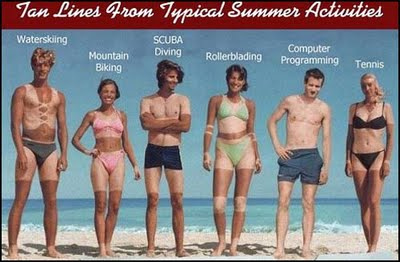
Awesome Tan – All of those training rides and runs basking in the sun will turn you into a bronze god. That is where you are not covered by your tri gear. Your tri shorts will provide cover for a distinct tan line between your pasty upper thighs, and then rest of your tan legs. Try varying your tri short length for the rainbow effect.

Comfortable in Lycra – You may be apprehensive, when first sporting your lycra training gear. You might try covering up with gym shorts, or bring extra clothes to a ride. This is short lived. Soon you will be rocking your lycra like your favorite pair of jeans. Lycra to the grocery store? Sure. After ride coffee shop? No problem. Church? Why not. Soon, you will wonder why everyone else doesn’t realize the comfort and awesomeness this magical textile.

Sexiness – All of this training and racing will have you tan and fit. You’ll be tight like a tiger, and ready to pounce. Well, you’ll be ready to pounce if it is before 8 pm, because you need to be in bed by 9 pm for a 5 am 4 hour ride in the morning. Maybe you want to wait until after the next big race,  so you don’t interfere with your recovery.

rocky-and-apollo-running-in-beach1

New Set of Friends – Triathlon is a great community. During your journey of training and racing you will make some great friends, who share a similar passion for life. They will be slightly more type A than you, and be happy to train with you if it fits in their highly regimented plan. There’s nothing better than chatting on a long ride or run with a friend. At some point during that workout your friend with pick up the pace, ruining your LSD pace, and hammering you into a shell of yourself. Thanks friend.


Healthy Lifestyle – Racing tris will lead you to a healthier lifestyle. You will be getting regular exercise, and watching your diet. This will last until you decide who want to go faster. Then, you will up your training volume way too quickly, and eventually get injured. You may find yourself in the doctor’s office on a Monday with a searing pain in your foot. Here’s how the conversation will go:

Doc: “How did you even walk in here? Your foot is in bad shape”

You: “It only hurts when I run”

Doc: “Well the only cure for this is rest”

You: “That’s cool. I don’t have another hard run planned  for two days. Is that enough rest?”

Doc: Speechless -gives you a look of bewilderment and disappointment.


Triathlon Badge – You are taking on new challenges and setting big goals. You want to share your goals and achievements with others. Soon everyone will know you are a triathlete, because that is all you talk about.

IM Los Cabos http://www.ironmanloscabos.com/
IM Los Cabos
<www.ironmanloscabos.com>

Family Vacations – Triathlons are held all over the world, and in some pretty sweet locales. You want to bring the family along to support and cheer you on. They are excited because they get a free trip out of the deal. Then you wake them up at 4:30 am on race morning, and they have to deal with your anxious, cranky pre-race mood. The rest of the race they get to stand in the (heat/wind/freezing temps/bugs) on the side of the road, so they can cheer you on for :45 secs of a two hour race.

Invest in Yourself –  In life, the best investment you can make is in yourself. This is what you will tell yourself, when shelling out a two months salary on a new Tri bike. Now,you will just need to explain this logic to your significant other.

marathon-car1

Car Rear Bumper Hall of Fame – As you progress through longer distance races, you can add the distance stickers to your rear bumper. You might start with a 13.1, then a 26.2, maybe a 70.3, and a 140.6. Soon enough your rear bumper can be a hall of fame to your triathlon career. The soccer mom in the SUV behind you will be so impressed.

photo credit: dullhunk via photopin cc

photo credit: speedophotos via photopin cc

You Control the Effort, Not the Result

I was a reading the “War of Art” by Steven Pressfiled, and a phrase really stuck out to me. It was, “You only have a right to the work, not the results or benefits.” I think this nicely relates to training and racing as well. To me, this means you control the effort and process, and not the results. So, enjoy and take satisfaction in the process, as that is where the joy should come from. You never know when the race day conditions will suck, or you get sick two days before your A race. If you are doing what you are meant to do, the results will come.

Let me give a recent example from my life. Last week, I raced a marathon. My training for the race was the best quality training, I have done for a marathon. I will confident in a PR. At mile 16 of the race, my legs had a different plan, and I finished 10 minutes slower than expected. It was not my day.

When I crossed the finish line, I was disappointed. How could I have training so well, and fallen short of my goal? Then, I thought back to the quote above. Training and racing endurance sports is my passion. I would not take back all of the training run with friends, or long runs that leave me feeling invincible. I put full effort into my plan, and i just came up short on race day. This is my purpose, and is not defined by the result.

I am not saying not to set goals. Goals are very important. The best way to succeed is to set a big goal, and work a plan backward to achieve it. Along the process of achieving that goal, find enjoyment in the work. If you succeed or fall short on race day, know you put in a full effort.

This is not an excuse either. If you didn’t put in a full effort you will know. That’s OK. Find out what resistance kept you from putting in your full effort, and overcome it next time. Rationalizing a bad performance with excuses is not acceptable.

What are your thoughts on this topic? How are you living your purpose, and enjoying the process?

Your First Triathlon in Four Hours A Week

Tv no

Have you seen people in a triathlon, and thought I would like to try that, but I don’t have the time? It seems everyone is increasingly busy, and time is a precious resource. An event that involves three different sports sounds like huge time commitment. What if you could complete your first triathlon, and change your lifestyle in two months using only four hours a week?

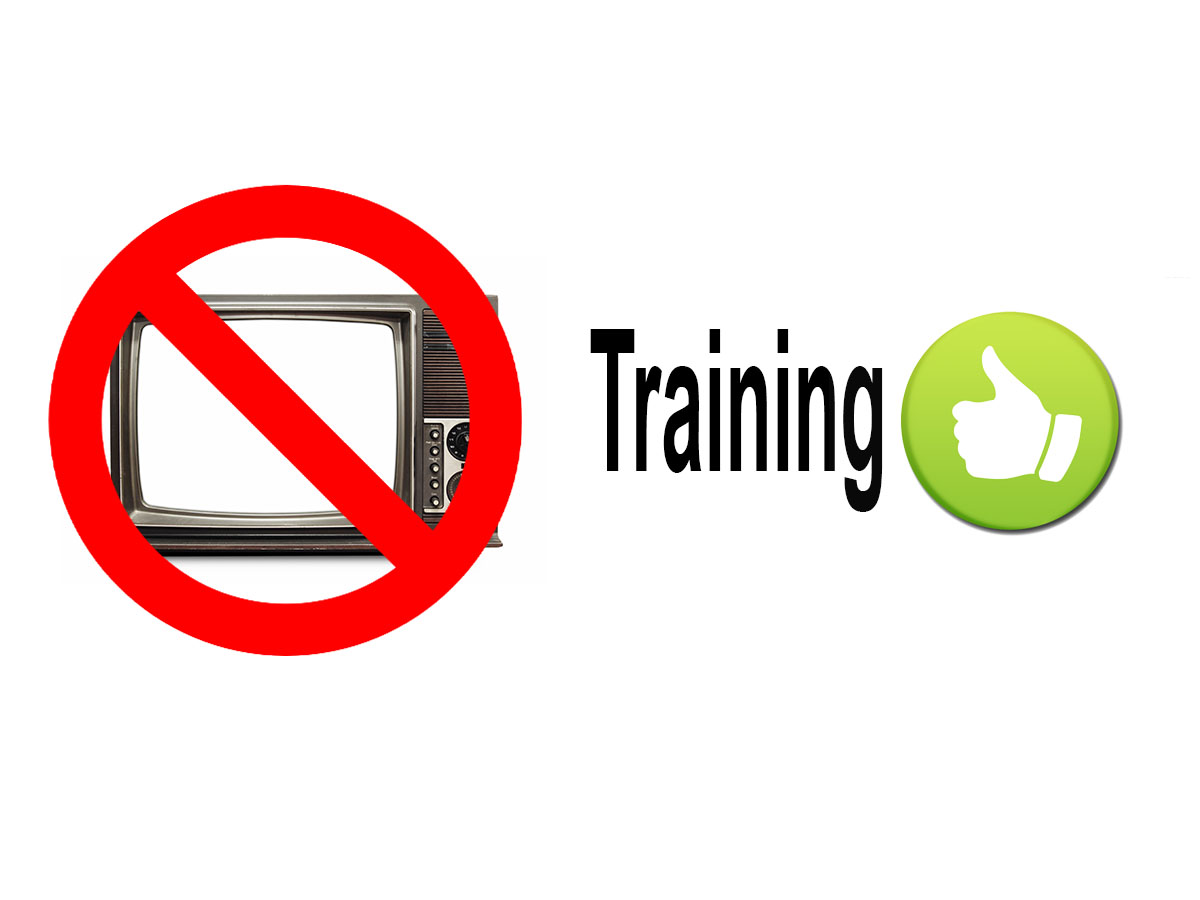
Most people can carve out four hours a week to do something they really want to do. The current Neilsen ratings say the average person watches four hours of TV a day, or 28 hours a week. Would you be willing give up one day of TV for a healthier lifestyle?

Now we got the excuses out of the way, lets get down to business. How can I be ready to race a Tri in the two months in only four hours, a week?

I suggest your first race be a sprint distance tri. Typical distances for a sprint are 500M swim (15 mins), 12 mile bike (35 mins), and a 5k (30 mins) run. Each leg of the race should take 30 minutes or less. We will use that 30 min time domain to structure the majority of your training. If you are already proficient in one of these sports, you can concentrate on the other two.

A typical week will look something like this:

Monday

Tuesday

Wednesday

Thursday

Friday

Saturday

Sunday

Off

Run/30min

Bike/30 min

Run/30min

Off

Bike/

1 hour

Run/30 mins

Swim/ 30min

Swim/30 mins

As you can see there are seven workouts broken up over five days. The two rest days are important to let your body rest, and feel like you have a life outside exercise. The double workout on Wednesday and Sunday could be done back to back inside to maximize your time. You can do your 30 mins in the pool, then hop on a spin bike or the treadmill to finish up. The swim days are flexible throughout the week. The only restriction is to not run and bike on the same day. Save your legs!

Does this sound like something you can do? Don’t be intimidated by the amount of workouts. Each workout is short enough to fit in your daily schedule, and leave you feeling energized. Also, there is flexibility in the schedule. If you can’t get to the pool on Wednesday, just move it to Thursday.

In future posts, I will layout the structure of each work during the week. In the mean time, let’s get moving!

If you have specific questions, please leave them in the comments. I will be happy to help.